Rin has spent over ten years cooking Thai food across South Yorkshire. She doesn't like to criticise - it's not the Thai way. But after a decade in the kitchen, she notices things. When a dish isn't right, she knows immediately. Not because she's judging, but because she's spent years learning what right actually feels like. Here, in her words, is what she sees most often.
Why Most UK Thai Food Is Too Sweet
This is the one that comes up again and again. Thai food in the UK has drifted sweet. Green curry that tastes like dessert. Pad Thai that's more sugar than tamarind. Sauces that have been balanced toward a British palate that expects sweetness in savoury food.
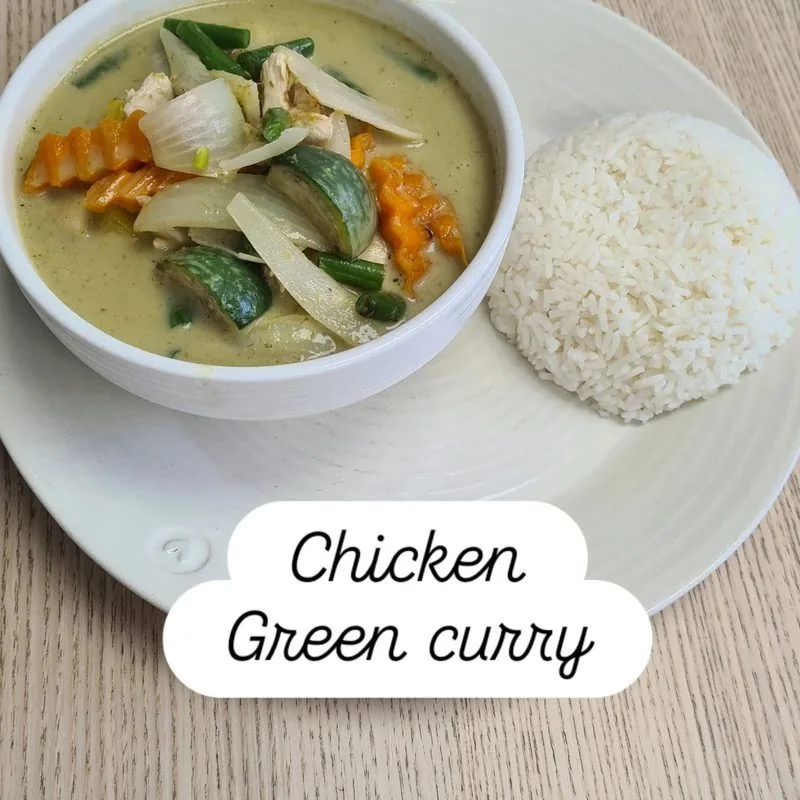
Proper Thai cooking isn't sweet. It's balanced - between heat, sour, salt, and sweet - but that balance doesn't mean any one element dominates. A well-made Thai green curry should have the heat of the chilli, the brightness of the lime leaves, the earthiness of the galangal, and yes, a touch of sweetness from the coconut milk. When the sweetness overwhelms everything else, those other elements disappear. What you're left with is coconut cream with some stuff in it.
Under Rin's direction, dishes are checked and adjusted as they cook. Ingredients and pastes can vary, so the kitchen works towards the right balance for each order rather than treating a recipe as an automatic result. That is part of authentic Thai food in Doncaster: the recipe is a starting point, not the destination.
Small Portions vs. Authentic Quality
Small portions get mentioned a lot when people talk about what's wrong with Thai restaurants. And yes, they're often disappointing. But the real issue behind small portions isn't generosity - it's what small portions often signal about how a kitchen is operating.
When a restaurant is making careful margin decisions at every plate, the cook isn't thinking about flavour first. They're thinking about cost. And a kitchen that's counting every gram of protein isn't the same kitchen that's throwing in a generous handful of fresh Thai basil because it's the right amount for the dish. The portion problem is often a symptom of a kitchen that's optimised for margin rather than taste.
At Charm Thai Cafe, we're an independent restaurant with a relaxed dine-in setting and a kitchen organised for dine-in, takeaway and delivery. Independence gives the kitchen control over ingredients and cooking standards. If a dish needs more lemongrass, it gets more lemongrass. That attention comes from how the kitchen is run, not from limiting the number of orders it can handle.
The Ingredients Tell the Story
When Rin eats Thai food elsewhere - which she does, because she loves the cuisine - she pays attention to the raw ingredients. Not the plating, not the presentation. The ingredients.
Thai cooking at its best uses a remarkable variety of fresh aromatics. Lemongrass, galangal, kaffir lime leaves, Thai basil, coriander root, bird's eye chillies - each one doing a specific job in the dish. Together, they create the layered flavour that makes Thai food distinctive. When you leave any of them out, or substitute dried herbs for fresh, or skip the ones that take time to prepare, the dish becomes simpler. Flatter. Less interesting.
The simplest indicator of a kitchen that takes Thai food seriously is the number of fresh aromatics being prepared before service. If the prep list is long, the food will usually be good. That volume of raw ingredients doesn't lie.
Every dish cooked to order.
At Charm Thai Cafe on Copley Road in Doncaster, sauces are prepared daily and dishes are finished in the wok per order under Head Chef Rin's direction. The starters, including spring rolls, dumplings and fish cakes, are handmade in-house. See the full menu here.
Authentic Pad Thai: The Ultimate Restaurant Test
If you want to know whether a Thai restaurant is serious, order the Pad Thai. It's one of the most commonly ordered Thai dishes in the UK, and one of the most commonly done badly.
A proper Pad Thai has a particular texture - the noodles (5mm rice noodles, soaked and stir-fried at high heat) should have a slight bite. The sauce - built from tamarind, fish sauce, and palm sugar - should coat the noodles without being gloopy. The egg should be scrambled through rather than fried separately and dumped on top. The beansprouts should be added at the end so they keep their crunch. The garnish - crushed peanuts, spring onion, dried chilli, lime - isn't decoration. It finishes the dish.
When any of these things are off - noodles too soft, sauce too sweet, egg rubbery, no crunch from the beansprouts - the dish loses its character. You end up with something that tastes vaguely Thai rather than something that actually is Thai. The detail matters.
The Pad Thai sauce is prepared in our kitchen under Rin's direction and balanced during cooking for each order. It is prepared carefully because shortcuts are immediately visible in a dish with so few places to hide. If you've had a disappointing Pad Thai somewhere and want to try one done properly, it's on our menu at Charm Thai Cafe in Doncaster's town centre - available with chicken, prawn, mixed or tofu.
Our No-Compromise Approach to Thai Cooking
This is the thing that is hardest to articulate but easiest to taste. There is a difference between food cooked with attention and food assembled without checking whether the balance is right. Cooked-to-order dishes can be adjusted in the wok before they leave the kitchen, while preparation and service remain organised across dine-in, takeaway and delivery orders.
Rin spent a decade at Thai Garden Cafe in Manvers before opening Charm Thai Cafe. In that time, she learned and kept learning what Thai food is supposed to taste like. The kitchen uses that experience to protect the balance and character of each dish without relying on simplified shortcuts.
That is what she brings to Copley Road: more than 10 years of kitchen experience, cooked-to-order Thai food and clear standards across dine-in, takeaway and local delivery. The restaurant welcomes dine-in guests, while the kitchen is organised to handle busy services and high order volumes.
How to Choose a Genuine Thai Restaurant in Doncaster
You don't need to be an expert to spot the difference. Order the Pad Thai. Notice whether the sauce is genuinely balanced or just sweet. Pay attention to whether the aromatics come through or whether everything tastes similar. Ask whether the starters are made in-house or bought in.
Good Thai food is worth finding. When it's right - properly balanced, generously made with real ingredients - it's one of the most satisfying cuisines in the world. Don't settle for the version that's been softened down until it's safe.
If you're in Doncaster and want to try authentic Thai food made without compromise, we're on Copley Road, close to the Frenchgate Shopping Centre and Doncaster Racecourse. We're open Mon, Wed-Sat 12-9pm. Reservations are recommended for popular dining times.
Visit Charm Thai Cafe
67 Copley Road
Doncaster, South Yorkshire
DN1 2QP