Pad Prik at a glance
| Question | Answer |
|---|---|
| What does the name mean? | Pad means stir-fry and prik means chilli. Read the rest of the name or the menu description for the seasoning. |
| What is Pad Prik King? | A dry-style curry stir-fry. The chicken recipe here uses red curry paste, long beans and makrut lime leaves. |
| Does the home recipe use coconut milk? | The chicken version here uses stock or water, cooked down to a coating. |
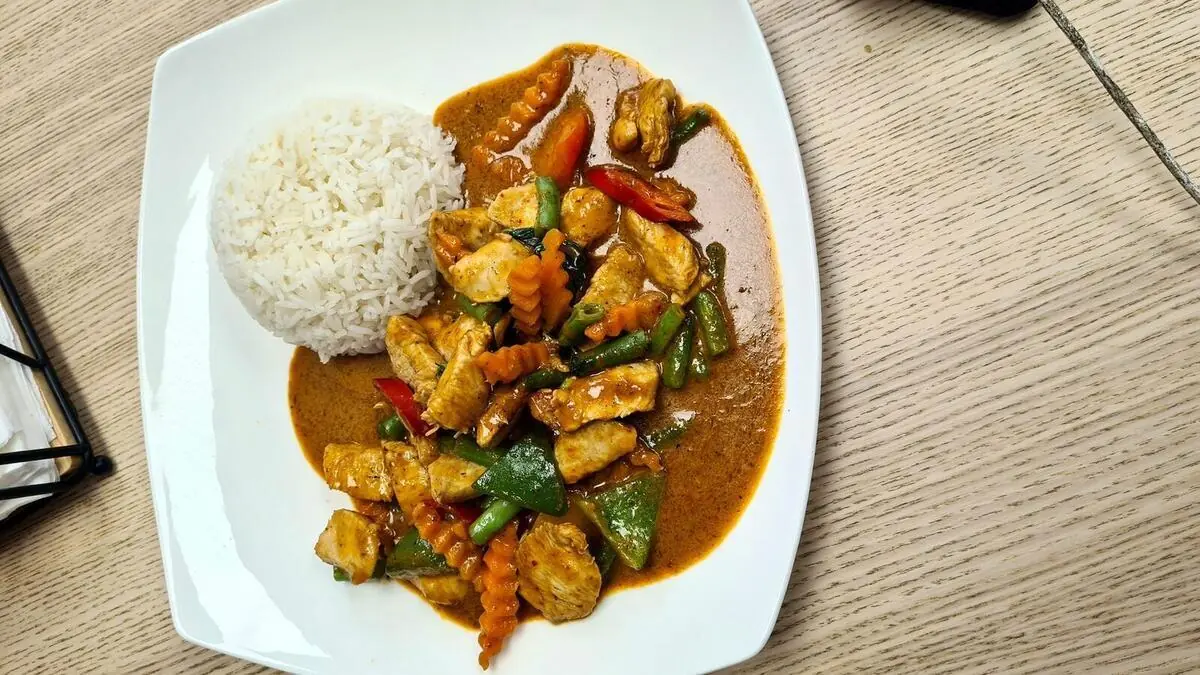
| How does Charm Thai Cafe serve Pad Prik? | We add coconut milk to make a sauce. Look for Spicy Chilli Paste Stir Fry on the stir-fry menu. |
| What can I serve with the home recipe? | Steamed jasmine rice, with optional cooked salted duck egg. |
For more dishes and how their flavours differ, see the guide to Thai food.
What the names tell you
ผัดพริก is a short name for stir-frying with chilli. Some recipes use fresh chillies. A longer name can tell you whether to expect curry paste, roasted chilli paste or mild fresh peppers. Read the full description if you are ordering. E1 E4 E5 E6 E7
| Name | What gives the example its flavour |
|---|---|
| Pad Prik | Praew’s fresh-chilli beef example uses sliced spur chillies and a soy and oyster sauce seasoning. E7 |
| Pad Prik King or Pad Prik Khing | The home recipe uses red curry paste, long beans and makrut leaves. The paste coats the chicken. E1 |
| Pad Prik Gaeng | Prik gaeng means curry paste. Mark Wiens’s chicken and long bean version overlaps in method and ingredients with Pad Prik King. E1 E4 |
| Pad Prik Pao | The chicken example uses roasted chilli paste, nam prik pao. E6 |
| Pad Prik Yuak | The chicken example features long, mild yuak peppers. E5 |
Khing means ginger. Pailin’s recipe and the Pholfoodmafia seabass version use no added fresh ginger. The Thai sources show several methods for cooking Pad Prik Khing. They leave the origin of its name uncertain. Pad Khing is a separate stir-fry where fresh ginger leads the flavour. E1 T1 T2
Choosing the paste, beans and lime leaves
Fry the paste gently enough for it to smell fragrant. A little stock or water helps dissolve the sugar and loosen the paste. The liquid reduces as the chicken and beans finish, leaving a coating. E1
| Ingredient | Role | What to check |
|---|---|---|
| Red curry paste | Provides chilli, aromatics and seasoning. | Check the label and strength. A different brand can change the heat and salt. E1 U4 |
| Long beans | Give the stir-fry bite. | Fine green beans work as a substitute. E1 |
| Makrut lime leaves | Give a citrus fragrance. | Fresh or frozen leaves work. Tear some for cooking and finely slice the rest for the plate. E1 |
| Palm sugar and fish sauce | Balance sweetness and salt. | Light brown sugar works as a substitute. Start at the low end of the fish sauce range if the paste is salty. E1 |
| Stock or water | Loosens the paste as it cooks. | Use unsalted stock, or water. Add it in stages. E1 |
A paste sold as Prik Khing paste is another option when a recipe calls for it. Rachel uses one for her pork version. KRUA.CO pounds a separate paste with dried chillies, aromatics, shrimp paste and dried shrimp for its crispy chicken. If you need a plant-based preparation, check the paste and all seasonings. E3 T2 U5
Chicken Pad Prik King recipe
Adapted from Pailin Chongchitnant’s Hot Thai Kitchen recipe. Serves 3. It is a dry-style home recipe using long beans, makrut lime leaves and stock or water. Use a 15 ml tablespoon, a 5 ml teaspoon and a 240 ml cup. The food probe and handling guidance are additions for home cooks. E1 U1 U2
Ingredients
- About 450 g (1 lb) boneless chicken breast or thigh, cut into even bite-sized pieces. Keep breast pieces at least 1 cm thick.
- 2 tsp fish sauce for the chicken and 1 to 3 tsp for the stir-fry
- 3 tbsp neutral oil, used as needed for searing and frying the paste
- 3 tbsp Thai red curry paste
- 2 tbsp finely chopped, packed palm sugar, or light brown sugar
- 120 ml unsalted chicken stock or water, divided
- 1½ cups long beans by volume, cut into roughly 4 cm lengths
- 7 makrut lime leaves, 5 torn and 2 finely shredded
- 1 cooked salted duck egg, optional, for serving
- Steamed jasmine rice, to serve
Method
- Season the chicken. Mix it with the 2 tsp fish sauce for the marinade. Cover and refrigerate for about 15 minutes while you prepare the beans and leaves.
- Sear in batches. Heat a little oil in a wok or large frying pan. Spread half the chicken in a single layer. Brown the first side briefly, turn the pieces, then move them to a separate dish for part-cooked chicken. Repeat with the rest. Finish both batches promptly in the sauce.
- Fry and loosen the paste. Let the pan cool slightly off the heat. Add enough oil for about a tablespoon in the pan and stir in the paste. Return to medium heat and stir until fragrant. Add the sugar, the stir-fry measure of fish sauce and about 60 ml of the stock or water. Stir until the sugar mostly dissolves. Add the torn leaves and use more liquid from the measured amount if the paste begins to catch.
- Finish the stir-fry. Return the chicken and toss through the sauce. Add the beans and cook until the chicken is done and the paste clings to the pieces. Use a clean probe in the thickest piece. The Food Standards Agency gives 75°C held for 30 seconds as one way to check thorough cooking. U1
- Serve. Scatter the finely shredded lime leaves over the finished stir-fry. Serve with jasmine rice and, if using, wedges of cooked salted duck egg.
Keep raw and part-cooked chicken and their utensils away from cooked food. Use a fresh plate for serving. The recipe uses fish sauce and can include egg. Check the paste for crustaceans and the labels of all prepared products for the people eating. U1 U4 U5
Other ways to cook Pad Prik King
| Version | What changes |
|---|---|
| Cook Eat World beef | Thinly sliced steak and snake beans with its own curry-paste and seasoning quantities. E2 |
| Rachel’s pork | Sliced pork and beans with Prik Khing curry paste. E3 |
| Pholfoodmafia seabass | Separately fried seabass tossed in red curry paste with long beans and makrut leaves. T1 |
| KRUA.CO crispy chicken | Battered chicken with a separately pounded paste, beans and lime leaves. T2 |
| KRUA.CO crisp catfish | Crisp catfish coated with paste and finished with lime leaves, fried chillies and salted egg yolk. T3 |
Use the measurements and order of the version you choose. If you want a separate coconut curry recipe, see the Thai red curry guide.
60 Pad Prik questions answered
Open a question, use the topic links or show all the answers.
- Names and flavour
- Similar stir-fries
- Curry paste and seasoning
- Beans and lime leaves
- Wok method
- Beef, pork, seafood and tofu
- Allergens and dietary choices
- The restaurant version and serving
- Troubleshooting
- Cooking safely and storing leftovers
Names and flavour
1. What does Pad Prik mean?
2. How do you pronounce Pad Prik King?
3. Are Pad Prik King and Phat Phrik Khing the same name?
4. Does Pad Prik King contain fresh ginger?
5. What does Pad Prik King taste like?
The chicken version here is salty and a little sweet, with chilli and a citrus aroma from makrut lime leaves. Paste choice affects the heat. E1
6. What does a dry curry mean?
The paste coats the meat and beans, with very little liquid left at the bottom of the pan. The home recipe uses a little stock or water during cooking. E1
Similar stir-fries
7. What is Pad Prik Gaeng?
8. How does Pad Prik Pao differ?
It uses nam prik pao, a roasted chilli paste with a different flavour. Praew’s chicken version uses it with peppers, onion and its own sauce mix. E6
9. What is Pad Prik Yuak?
It is a stir-fry featuring mild, long yuak peppers. In Mark Wiens’s chicken example they are the main pepper. E5
10. Is Pad Prik King the same as Pad Khing?
11. How does it differ from Thai red curry?
The home stir-fry reduces until the paste clings to the chicken and beans. The red curry guide has a separate coconut curry recipe with more liquid. E1
Curry paste and seasoning
13. Can I use shop-bought red curry paste?
14. Can I use a paste sold as Prik Khing paste?
Yes. Rachel’s pork recipe uses a paste sold for this dish. Follow the proportions of the recipe you choose, as pastes vary in strength. E3
15. Is nam prik pao a direct swap for red curry paste?
16. Can I replace palm sugar?
Light brown sugar is Pailin’s suggested substitute. Dissolve it in the pan with the fish sauce and a little stock or water. E1
17. How much fish sauce goes into the wok?
Pailin gives a range of 1 to 3 teaspoons for the stir-fry, separate from the 2 teaspoons used to marinate the chicken. Start at the lower end if your paste is salty. E1
18. Can I make it less hot?
Choose a red curry paste with a heat level that suits you. Reducing the amount also reduces the seasoning, so taste the cooked dish before adjusting it. E1
Beans and lime leaves
19. Which beans go into the home recipe?
It uses long beans, also called yardlong beans. Cut them into short lengths before you heat the pan. E1
20. Can I use French beans instead?
Yes. Pailin suggests fine green beans as a practical substitute when long beans are difficult to find. E1
21. How do I keep the beans crisp?
22. Can I use frozen makrut lime leaves?
Yes. Pailin suggests frozen leaves as an option when you cannot find fresh ones. E1
23. Why are some lime leaves torn and others shredded?
The torn leaves perfume the sauce as it cooks. The finely shredded leaves add aroma just before serving. E1
24. Can I use lime juice instead of lime leaves?
Lime juice adds acidity. The leaves supply a different fragrance. For the recipe here, use fresh or frozen makrut leaves if you can find them. E1
Wok method
25. What cut of chicken should I buy?
Pailin uses chicken breast or thigh. Cut it evenly and keep breast pieces at least 1 cm thick so they do not dry out too quickly. E1
26. How long does the chicken marinate?
27. Why sear the chicken in two batches?
Spreading the pieces out lets them brown without crowding the wok. The chicken finishes cooking after it goes back into the paste. E1
28. Why take the pan off the heat before adding the paste?
Letting the pan cool slightly gives you time to loosen the paste in oil before heating again. Stir it as it cooks so it becomes fragrant without scorching. E1
29. When do I add the stock or water?
Add part when you stir in the sugar and fish sauce. Use the rest as needed to loosen the paste or stop it sticking. E1
30. Can I use a frying pan?
Yes. Pailin gives a wok or a large frying pan as options. Work in batches if the pan cannot hold the chicken in one layer. E1
Beef, pork, seafood and tofu
31. Can I make Pad Prik King with beef?
Yes. Lee Jackson’s Cook Eat World recipe uses thinly sliced steak with snake beans and lime leaves. Use its own quantities and cooking sequence. E2
32. Can I make it with pork?
33. Can I make it with seafood?
34. What is Pla Pad Prik Khing?
Pla means fish. Pholfoodmafia’s example specifies seabass. The fish is fried separately before it is coated in the paste. T1
35. Can I use tofu?
36. Can I make it with crispy chicken?
Yes. KRUA.CO’s crispy chicken version coats and fries the chicken and uses a separately pounded paste. Use that recipe for its own ingredients and method. T2
Allergens and dietary choices
37. Does the home chicken recipe contain fish?
38. Does red curry paste contain shrimp?
39. Is Pad Prik King gluten-free?
40. Does it contain egg?
41. Is tofu Pad Prik vegan?
42. Can I order with an allergy at Charm Thai Cafe?
Tell the team what you need to avoid before ordering. Our shared kitchen handles allergens, and we cannot guarantee freedom from cross-contact.
The restaurant version and serving
43. Does Charm Thai Cafe add coconut milk to Pad Prik?
Yes. We add coconut milk to make a sauce for our Pad Prik. The home chicken Pad Prik King on this page uses stock or water for its dry-style coating.
44. Which vegetables are in the restaurant dish?
The main menu lists onion, mixed pepper and spring onion with the chilli paste. Check the stir-fry menu for current choices.
45. How spicy is Charm Thai Cafe’s Pad Prik?
The main menu marks it medium. Tell the team how much heat you enjoy when ordering.
46. Can I ask for a vegan or gluten-free version at Charm Thai Cafe?
The menu lists vegan and gluten-free preparations. Tell us what you need so we can check the whole dish. If you have an allergy, explain it separately before ordering.
47. What should I serve with Pad Prik King?
Plain jasmine rice gives the concentrated seasoning a softer accompaniment. The home recipe suggests cooked salted duck egg as an optional side. E1
48. Where can I see the restaurant’s Pad Prik menu?
Open the stir-fry menu and look for Pad Prik, the spicy chilli paste stir-fry.
Troubleshooting
49. Why is the sauce pooling in the pan?
The dry-style version needs a short reduction. Let excess liquid cook away while the chicken finishes, until the paste coats the chicken and beans. E1
50. Why did my paste burn?
The pan may have been too hot after searing the chicken. Cool it briefly, loosen the paste in oil off the heat, then stir it over medium heat. E1
51. Why is my chicken dry?
It may have cooked too long in the first stage. Brown the outside briefly, then finish cooking it after it returns to the sauce. E1
52. What if the finished stir-fry is too salty?
Use less fish sauce next time and check how salty the paste is. Plain rice can soften the impact of a concentrated coating at the table. E1
53. What if the paste sticks before the chicken is cooked?
Cooking safely and storing leftovers
55. How can I check the chicken is fully cooked?
Probe the thickest piece with a clean food thermometer. The Food Standards Agency lists 75°C held for 30 seconds as one time and temperature combination. U1
56. How long can I keep the cooked stir-fry?
Cool it in small portions, refrigerate within one to two hours and keep the fridge at 0°C to 5°C. Eat within 48 hours or freeze it. U2
57. Can I freeze the cooked chicken stir-fry?
Yes. Cool and freeze it in portions, then defrost in the fridge. Use it within 24 hours of fully defrosting. The beans may soften. U2
58. How should I reheat it?
Reheat the stir-fry once, until steaming hot throughout. Stir or turn the pieces during microwave reheating. U1
59. How should I store and reheat the rice?
Cool rice quickly, ideally within one hour. Keep it in the fridge for no more than 24 hours and reheat only once until steaming hot throughout. U3
60. How many calories are in Pad Prik?
That depends on the recipe, portion size, amount of oil and sauce, and whether rice is included. The home dry-style recipe and the restaurant dish use different ingredients.
Thai words you may see in recipes
These are approximate English sound guides. They leave out Thai tones.
| Thai | Approximate pronunciation | Meaning |
|---|---|---|
| ผัด | pat | Stir-fry |
| พริก | phrik | Chilli |
| ขิง | khing | Ginger |
| พริกแกง | phrik gaeng | Curry paste |
| พริกหยวก | phrik yuak | A long, mild chilli |
| น้ำพริกเผา | nam phrik phao | Roasted chilli paste |
| ไก่ | kai or gai | Chicken |
| เนื้อ | neua or nuea | Beef in a dish name |
| หมู | moo | Pork |
| ปลา | pla | Fish |
| ถั่วฝักยาว | thua fak yao | Long bean |
| ใบมะกรูด | bai ma-kroot | Makrut lime leaf |
| น้ำปลา | nam pla | Fish sauce |
| น้ำตาลปี๊บ | nam tan peep | Palm sugar sold in tubs or tins |
| กะทิ | ka-thi | Coconut milk |
| กะปิ | ka-pi | Shrimp paste |
| ไข่เค็ม | khai khem | Salted egg |
| ข้าวสวย | khao suai | Cooked rice |
The chicken recipe above uses nam pla (fish sauce) in the marinade and bai ma-kroot (makrut lime leaves) in the stir-fry. T1 T2 T3 E1 E4 E5 E6 E7
Pad Prik at Charm Thai Cafe
Our menu calls it Pad Prik, Spicy Chilli Paste Stir Fry. We add coconut milk to make a sauce. The main menu describes mixed pepper, onion and spring onion with a choice of protein. It marks the dish medium and serves it with jasmine rice.
The menu lists vegan and gluten-free preparations. Tell us what you need so we can check the paste, seasonings and preparation. If you have an allergy or coeliac disease, tell us separately before ordering. Our shared kitchen handles allergens including nuts, seafood, wheat and eggs, and we cannot guarantee freedom from cross-contact.
Sources and further reading
Pailin Chongchitnant supplies the main chicken method. Thai culinary publishers document several other preparations. Food safety and label guidance comes from the Food Standards Agency and Coeliac UK.
- T1. Pholfoodmafia, referencing Suchet Saenkham, Stir-fry Red Curry with Seabass. Fried seabass version, long beans, makrut leaves and the ginger distinction.
- T2. Sangdad Publishing, KRUA.CO crispy chicken Pad Prik Khing. Crispy chicken, pounded paste and ingredient terms.
- T3. Nawara Plianboonlert, KRUA.CO crispy catfish Pad Prik Khing. Crispy catfish, coconut sugar, lime leaves and salted egg yolk finish.
- E1. Pailin Chongchitnant, Hot Thai Kitchen Pad Prik King. Main chicken recipe, yield, dry-style method, beans and leaf preparation.
- E2. Cook Eat World, Pad Prik King. Separate steak and snake bean variation.
- E3. Rachel Cooks Thai, Stir Fried Pork with Chili Paste. Pork, beans and Prik Khing paste.
- E4. Mark Wiens, Eating Thai Food Gai Pad Prik Gaeng. Chicken curry paste stir-fry and overlap with the long bean and lime leaf preparation.
- E5. Mark Wiens, Eating Thai Food Gai Pad Prik Yuak. Long, mild yuak peppers and example seasonings.
- E6. Praew, Hungry in Thailand Gai Pad Prik Pao. Separate roasted chilli paste preparation with chicken.
- E7. Praew, Hungry in Thailand Nua Pad Prik. Fresh-chilli beef preparation and name.
- U1. Food Standards Agency, Cooking your food. Cooking through, probe temperature and reheating.
- U2. Food Standards Agency, How to chill, freeze and defrost food safely. Raw meat separation, chilling, freezing and defrosting.
- U3. Food Standards Agency, Home food fact checker. Rice cooling, storage and reheating.
- U4. Coeliac UK, How to Read Gluten Free Food Labels. Check packaged ingredient labels for gluten.
- U5. Food Standards Agency, Allergen guidance for food businesses. Separate allergen categories including fish, crustaceans, egg and molluscs.