1. The Region
South East Asia and its cuisines
South East Asia covers eleven countries: Thailand, Vietnam, Cambodia, Laos, Myanmar, Malaysia, Singapore, Indonesia, the Philippines, Brunei and Timor-Leste. Geographically it splits between the mainland - sat between India and China - and the maritime archipelago stretching down toward Australia. Culturally and culinarily it's one of the most diverse regions on the planet.
Each country has its own distinct cuisine. Thai cooking is what most UK diners recognise first. Vietnamese has become the second-best-established. Malaysian, Indonesian, Filipino and Burmese cooking are all genuine, fully formed cuisines with growing presences in larger UK cities, though they're rarer in places like Doncaster.
What unites them, broadly, is geography and trade history. The region sits at the historical crossroads of Indian, Chinese, Arab and European maritime trade. That long contact left a shared pantry - rice, fish sauce, palm sugar, coconut, chillies, lemongrass and galangal among others - even where the individual cuisines developed in different directions.

2. The Cooking
The hallmarks of South East Asian cooking
SEA cuisines vary widely but share some recognisable threads. If you've eaten across the region you'll know these as the through-lines.
Balance over single notes
SEA cooking is built on the interplay of sweet, salty, sour and spicy in the same bite. Few dishes lean on just one flavour. Thai cooking is one of the clearest expressions - palm sugar, fish sauce, lime, chilli - but Vietnamese, Lao and Cambodian cuisines all work the same axes.
Fish sauce and shrimp paste
Foundational seasonings across the region. Fish sauce in Thai (nam pla), Vietnamese (nuoc mam), Filipino (patis). Shrimp paste (kapi, belacan, terasi) in curry pastes and dipping sauces. These provide the savoury salt base that soy sauce plays in East Asian cooking.
Aromatic herbs and roots
Lemongrass, galangal, kaffir lime, Thai basil, coriander root, mint, perilla. Used fresh, often in big quantities, often added at the end or at the table. This is what gives SEA cooking its distinctive lift and fragrance.
Rice as the staple
Long-grain jasmine in Thailand, broken rice in Vietnam, glutinous sticky rice in Laos and northeast Thailand, fragrant rice in Malaysia. Rice noodles too - sen yai, sen lek, banh pho, kway teow. Wheat is much less central than in Chinese cooking.
Coconut milk and palm sugar
Coconut milk softens curries and sauces (Thai, Malaysian, Indonesian). Palm sugar replaces refined sugar in much SEA cooking - lower glycaemic, more complex flavour, made from the sap of various palm species native to the region.
Cooking to order
Stir fries, curries built per bowl, soups finished at service. The wok-and-burner stations you see at SEA street stalls work the same way as our kitchen here - food cooked when it's ordered, not held under heat lamps.
3. Thai in Context
Where Thai cuisine sits in the region

Thai cuisine sits at the geographic and historical centre of mainland South East Asia. The country shares long borders with Myanmar to the west, Laos and Cambodia to the east, and Malaysia to the south. Culinary influence has flowed in all directions for centuries.
What you taste in Thai food is partly that geography. The chilli that defines Thai cooking arrived from the Americas via Portuguese traders in the sixteenth century, then spread across the region. Indian spice traditions came in via Burmese influence in the north. Chinese stir fry techniques came in via long-established Thai-Chinese communities in central Thailand and Bangkok. Malay-influenced curries with coconut sit alongside leaner northeastern Lao-influenced dishes.
That synthesis is why Thai cooking is often the easiest entry into South East Asian cuisine for diners new to the region. It contains traces of much of what's around it, balanced and refined into something distinctly its own. Rin has cooked Thai food professionally for 10+ years across South Yorkshire, and the menu at Charm Thai Cafe reflects that depth - the central Thai canon, with a few northeastern dishes alongside.
5. Dietary Range
Dietary range across South East Asian cooking
SEA cooking happens to accommodate most dietary needs well, partly because of the food culture and partly because rice and rice noodles sit at the centre rather than wheat.
Gluten free. Rice and rice noodles are the regional staples - both naturally gluten free. Soy sauce is sometimes used but easily replaced with gluten free soy or omitted. Our gluten free Thai menu covers most of the main menu, with a dedicated GF kitchen for these orders.
Vegan and vegetarian. Buddhist Thai food culture has long supported plant-based eating. Our vegan menu replaces fish sauce with soy, swaps oyster sauce for vegan oyster sauce, and omits egg entirely from the vegan Pad Thai and Pad See Eew. Coconut milk in the curries is naturally vegan.
Halal. Significant Muslim populations across maritime SEA (Indonesia, Malaysia, Brunei, southern Thailand) mean halal cooking has a long established place in the region. Our chicken and beef are halal. Pork is on the menu but not halal - check the menu line when ordering. Full halal Thai menu.
6. Ordering
Booking, takeaway and delivery
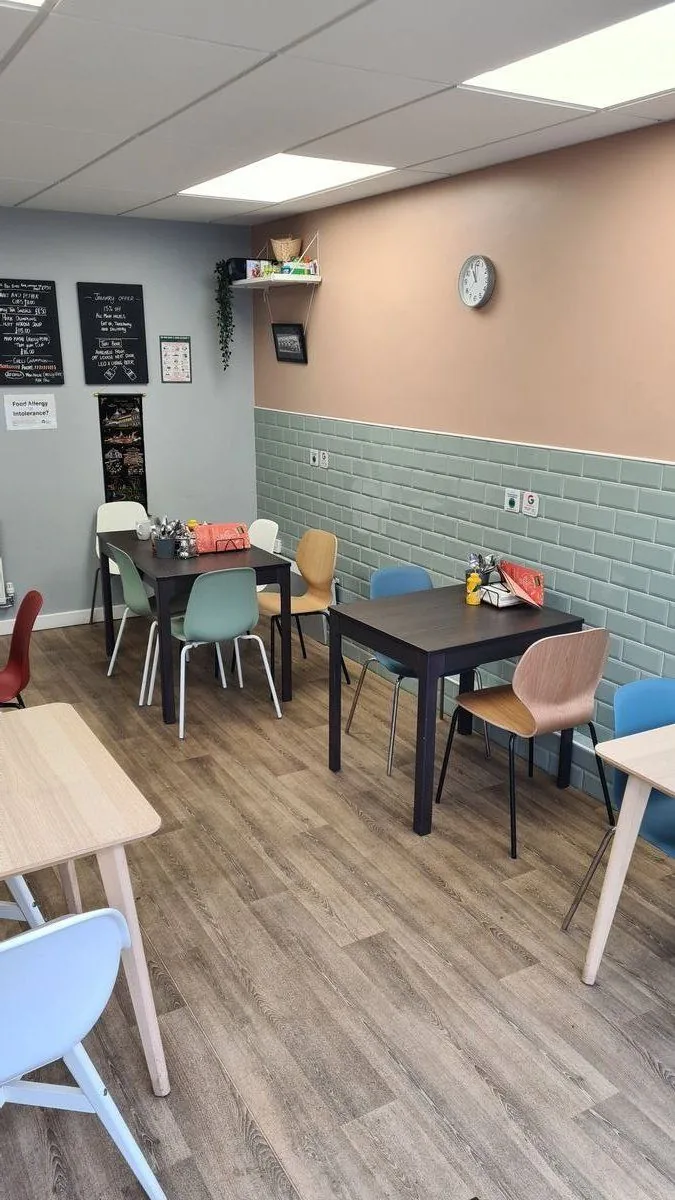
Dine in. Five tables at 67 Copley Road. Book online or phone 01302 210408. BYO with no corkage. Friday and Saturday evenings fill quickest. Open Monday and Wednesday to Saturday, 12:00 to 21:00. Closed Tuesday and Sunday.
Takeaway. Phone the order in for collection from Copley Road. Card payment by secure link or cash on collection.
Delivery. We deliver direct within an 8-mile radius of Doncaster for a flat £2 fee. No aggregators, no commissions added.
Five tables, hands-on cooking, time to look after every guest. South Yorkshire's most-reviewed 5-star Thai restaurant on Google.
7. Finding Us
Where to find us in Doncaster
Charm Thai Cafe is at 67 Copley Road, Doncaster, DN1 2QP. Around five minutes' walk from the Wool Market, ten minutes from Frenchgate Shopping Centre, and a short walk from Doncaster train station. On-street parking along Copley Road is free in the evenings; Trafford Way car park is a few minutes away.
- 67 Copley Road, Doncaster, DN1 2QP
- Five minutes from the Wool Market
- Open Mon, Wed-Sat 12:00-21:00
- BYO no corkage - no service charge
- Direct delivery within 8 miles for £2 flat
8. Frequently Asked
South East Asian Food in Doncaster, Answered
Book or Visit
Charm Thai Cafe
Charm Thai Cafe
67 Copley Road, Doncaster, South Yorkshire, DN1 2QP
Ready to explore South East Asian food in Doncaster?
Thai cooking from the heart of the region, five tables, BYO no corkage. Phone to book or order for delivery.
📞 Call 01302 210408 View Full Menu